
The History of Yusando: 2014–2015
FOUNDER'S STORY — 01
How I became a natural-cultivation
farmer at 30, with no experience
Part 1: Before natural cultivation
Yusando Co., Ltd. — Ryotaro Isozaki
SUMMARY
What happened in 2014 and 2015
- In 2014, I became a farmer at 30 — with no field, no money, and no experience at all
- I worked at the Kansai office of a natural-cultivation producers' network while farming part-time for about two and a half years
- Mr. Doi, Mr. Kihara, and Mr. Atsumi — meeting these three people is how our natural cultivation started to take shape
- In February 2015, my first son was born
- It all began with a tiny six-se rice paddy and a small tea field in Ujitawara
- The only tea we made that year was hojicha
Hello, I'm Ryotaro Isozaki of Yusando Co., Ltd.
In the Yamato highlands of Nara, I grow tea through natural cultivation — no fertilizer, no pesticides.
How did someone with no field, no money, and no experience end up becoming a natural-cultivation farmer? It's a bit of a long story, but let me tell you how it began.
I grew up in a salaryman family
I grew up in Hirakata, a city in Osaka. My family had been a salaryman family since my grandfather's generation — everyone on my father's side worked for a company. Nobody ever imagined I'd become a farmer. Even now, people are amazed by it.
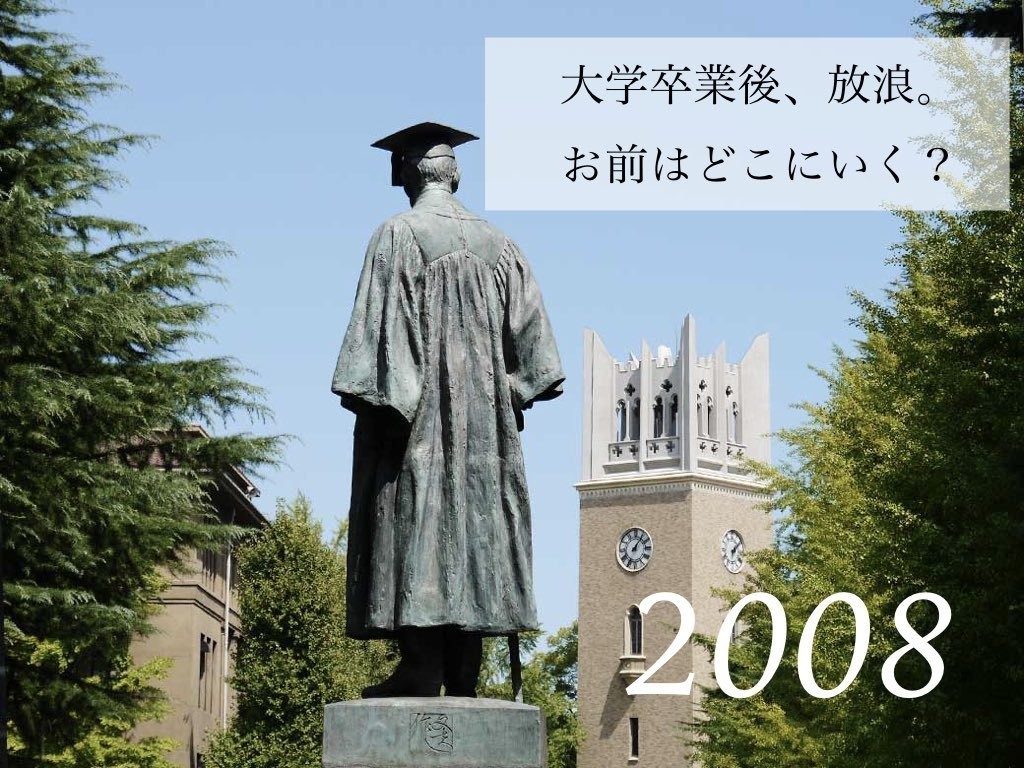
I always loved studying. I liked things I could work through quietly on my own. I graduated from a private high school in Osaka and went on to Waseda University in Tokyo, where I majored in Eastern philosophy — my graduation thesis was on "The Philosophical Development of Early Buddhism." It took me five years, but I finally graduated.
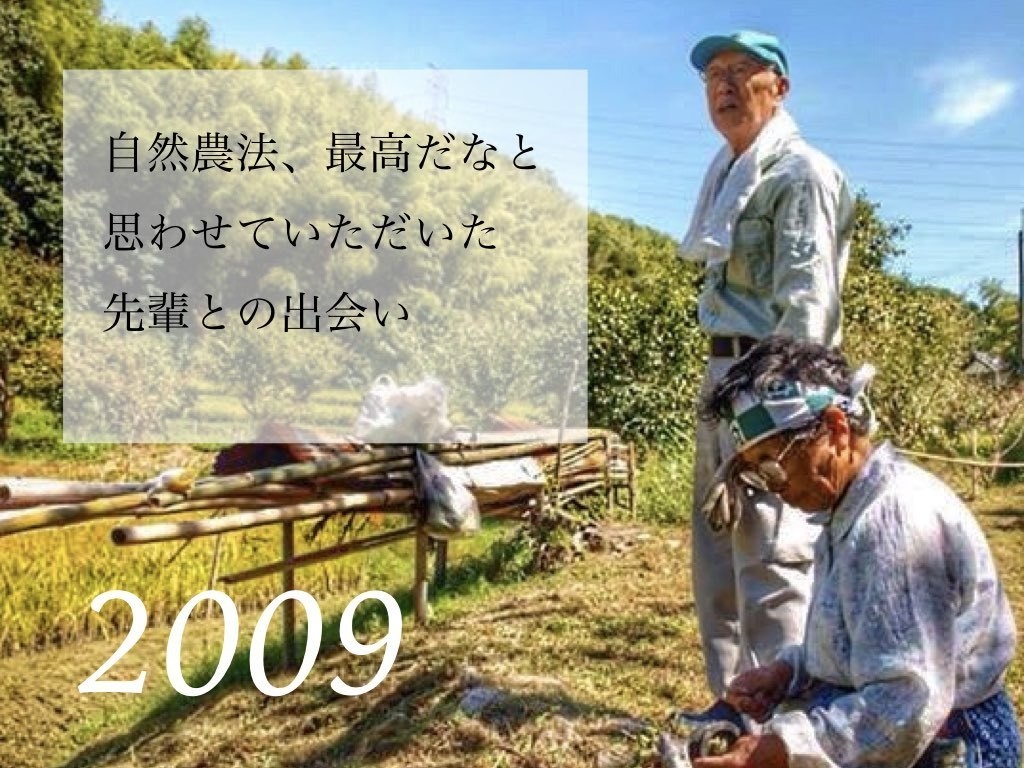
At 24, I discovered natural cultivation
I first encountered natural cultivation when I was 24. I'd somehow managed to graduate from university but hadn't even started job hunting — I was just drifting around back home. Mr. Uno, who practiced natural cultivation, reached out to me, and for a year he taught me how to grow rice.
Wading into the paddy, pulling weeds, cutting rice — "what a healthy way to live," I thought. "It would be amazing if I could make a living doing this." At the time, that thought was still vague and half-formed.
After that I traveled around the world, breathing in the freedom and beauty of a life close to the land, and came to feel, deeply, how wonderful it is simply to be alive.

At 30, I became a farmer with no experience
2014
After working for an organization, I trained for just six months in 2013 under a friend who was a tea farmer. In 2014, I went independent and became a farmer at 30.
Not that I had a field to speak of — in reality I was little more than a freeter. That June, I married the woman I'd promised to marry six years earlier. She's the miracle of a woman who married me when I had no money, no status, nothing but hope (laughs). I'm still amazed by her foresight.
Soon after, we found out she was pregnant with our first child, and I suddenly had a family to support, with almost no experience, in natural cultivation.
With no field of our own,
our natural cultivation began.
Starting from zero fields
In 2014, we started natural cultivation without a field of our own.
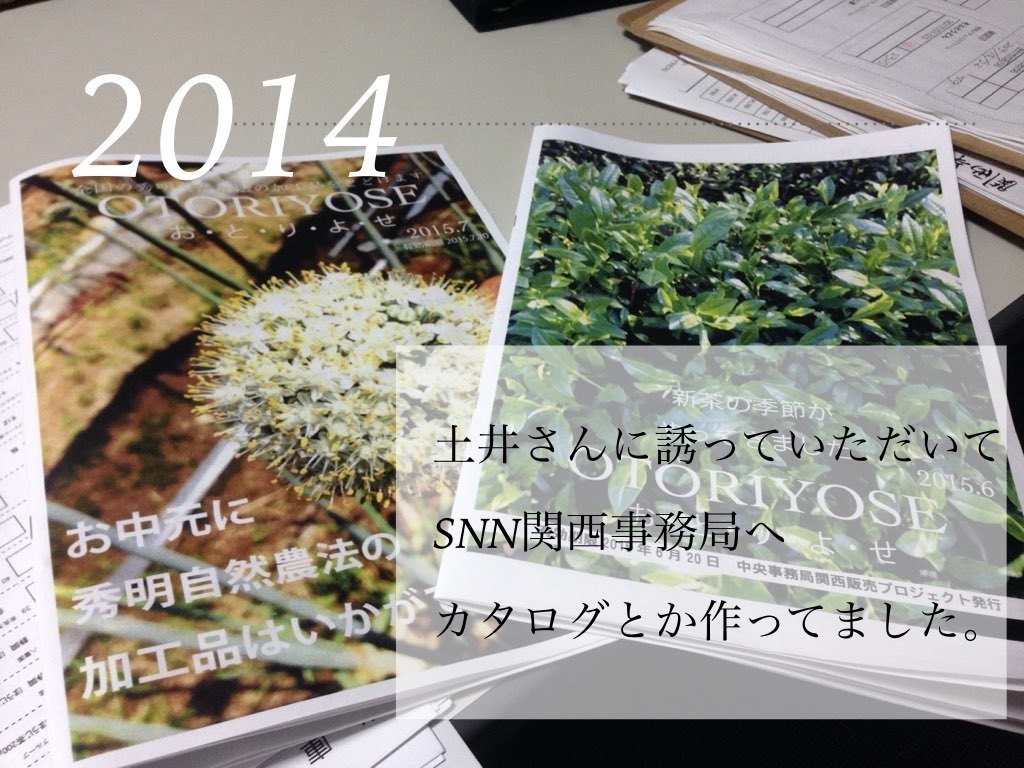
Farming alone couldn't support us, so when Mr. Doi of the natural-cultivation producers' network reached out, I took a job as a part-time staff member at its Kansai office. I kept up this part-time farming, alongside the network's work, for about two and a half years.
Working with my seniors there — planning distribution reforms and study groups for producers — I learned so much and met so many people, and my feelings toward producers grew stronger. At the same time, the systems I designed made the office work so much more efficient that there was less and less for me to do. Just like AI takes people's jobs, my own system took my job from me (laughs).
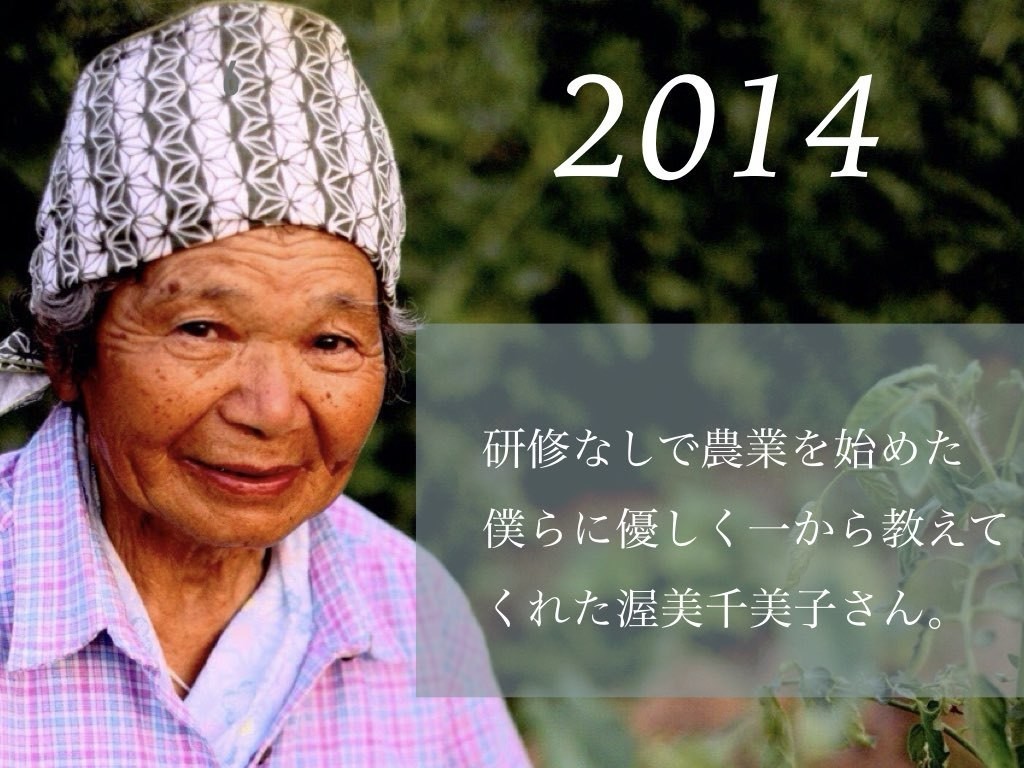
Three people I owe everything to
Mr. Atsumi reached out to me, and I was able to borrow a paddy and a field that a collaborator, Mr. Ryokuro Yamamoto, had been using. He taught me the techniques too — tea growing, rice paddies, vegetable fields — small as it was, I learned the basics there.
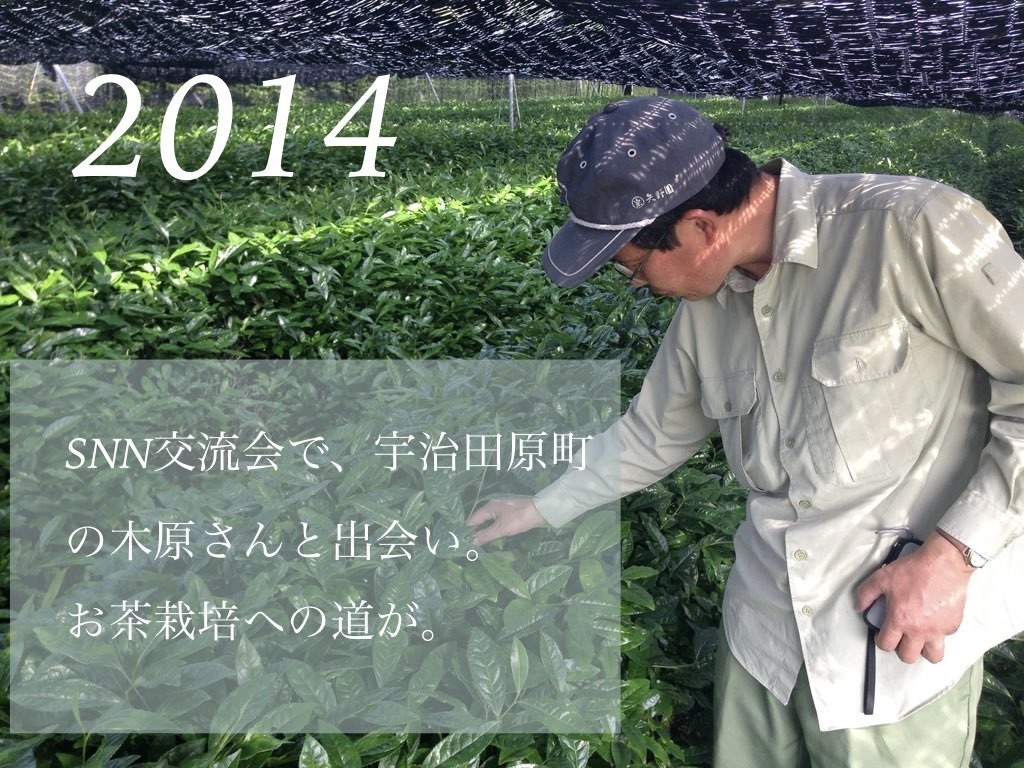
Then Mr. Kihara of Ujitawara, whom I met at a gathering in 2014, introduced me to a tea field. This small field became the birthplace of our tea-making.
Mr. Doi, Mr. Kihara, Mr. Atsumi. Through the natural-cultivation network, meeting these three people is how our natural cultivation began to take shape.
From a tiny six-se paddy
2015
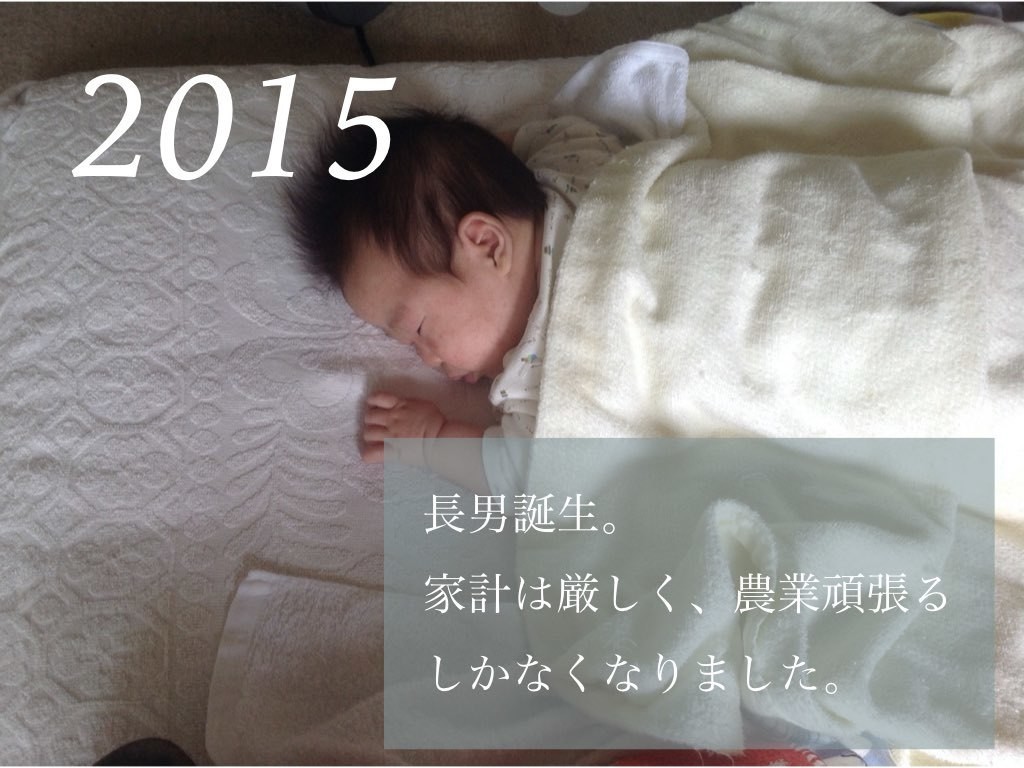
In February 2015, my first son was born. There was nothing left to do but throw myself into farming even harder.
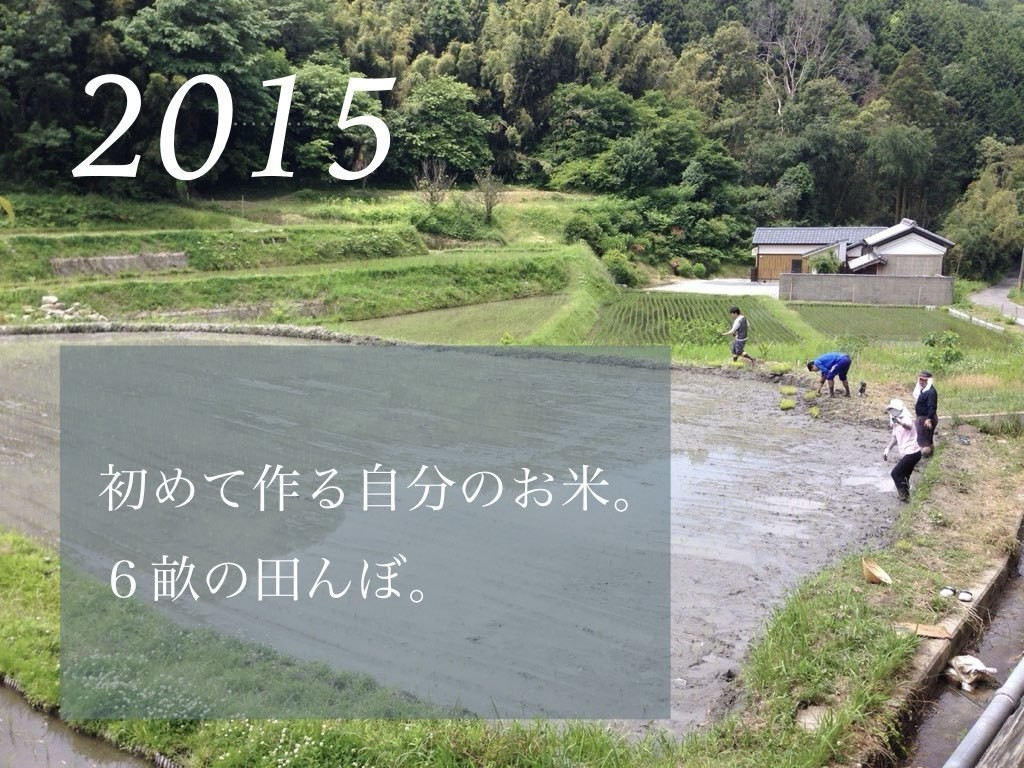
With help from the late Mr. Hosonaga, our natural cultivation began with just a tiny six-se rice paddy. I didn't even own a car back then, so he lent me his.
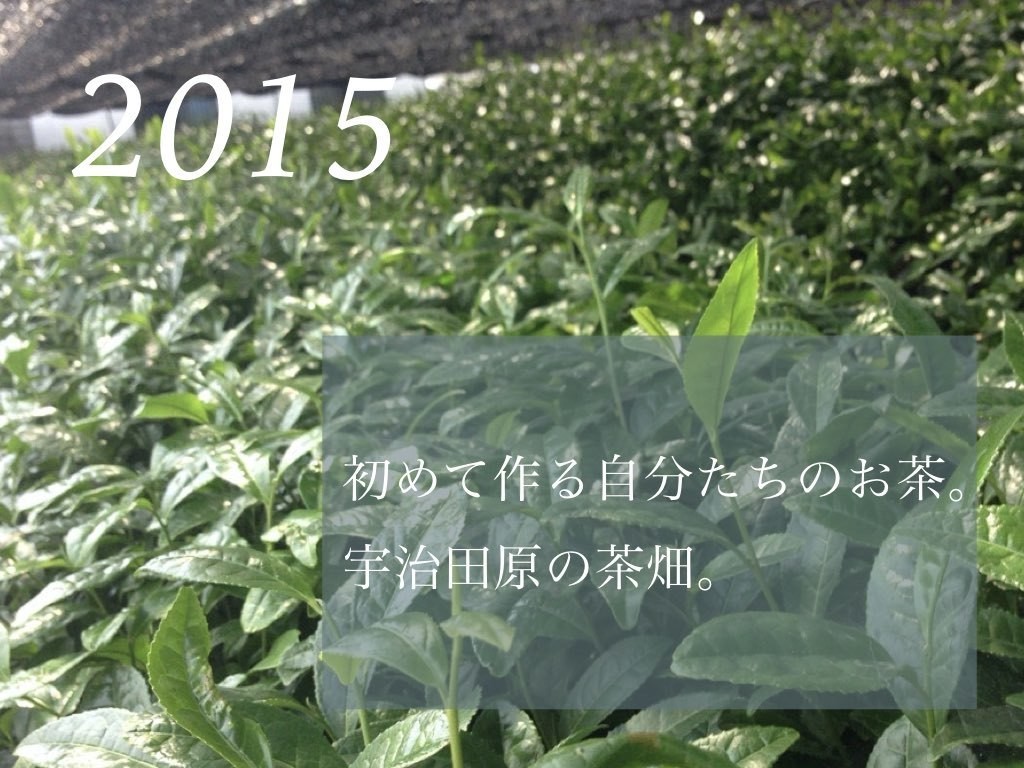
My first tea harvest in Ujitawara. That year, all we made was hojicha.
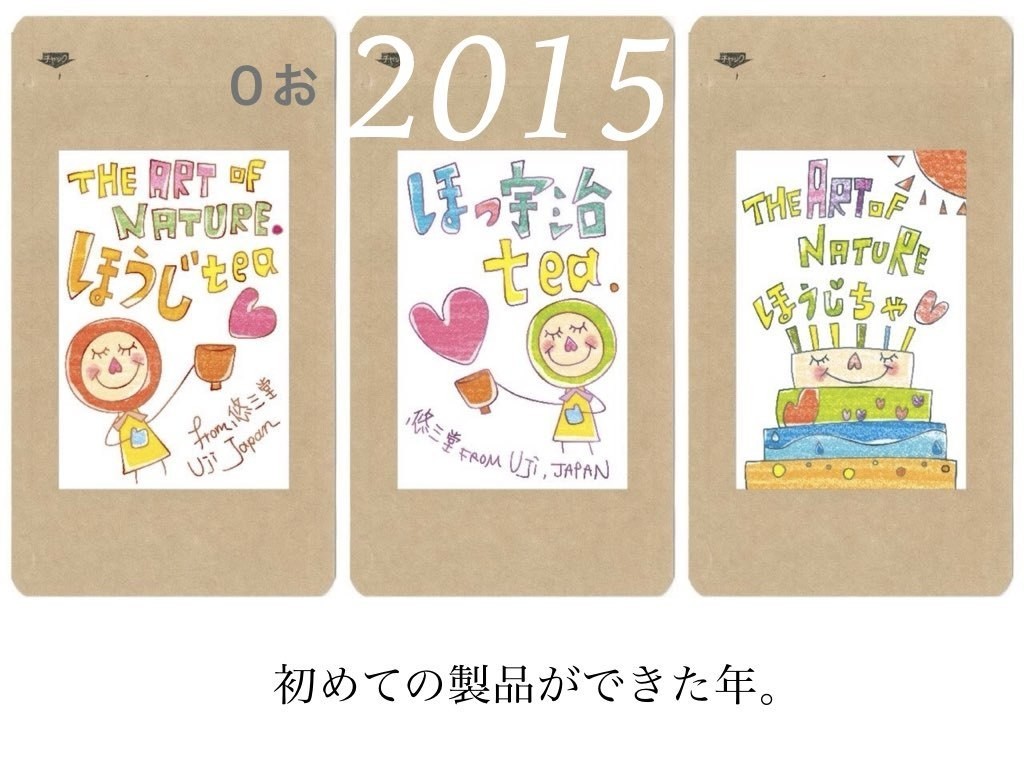
I still remember when our first product came together. The cute design was a big hit with kids. But it cost far too much to make, so from the following year I switched to a cheaper design (laughs).
We had no field, no money, no experience.
Our natural cultivation moved forward only because of the people we met.